
For Florida vehicle owners and small commercial fleets, maintenance records are more than paperwork—they’re potential proof that your vehicle was serviced properly. The FTC advises consumers to keep “all service records and receipts” because they “can be used to prove the vehicle was properly maintained,” including items like oil changes, tire rotations, belt replacement, brake pad replacement, and inspections. (Sources: FTC press release; FTC consumer guidance)
That guidance matters most when a warranty claim comes up. The FTC explains that when you need to use a warranty, maintaining repair and maintenance records can help show you properly maintained your vehicle and may help if a claim is challenged. (Source: FTC consumer guidance; FTC press release)
What to keep: receipts and service documentation
The FTC suggests keeping warranty-related maintenance records that include the details of repair and maintenance work, such as routine service and inspection items. (Source: FTC consumer guidance)
In practice, that commonly means saving:
- Service receipts (e.g., oil changes, tire rotations)
- Receipts covering specific parts or service (e.g., belt and brake pad replacement)
- Inspection records
- Repair orders that describe the work performed
The FTC also notes that dealers/manufacturers may ask to see maintenance records. (Source: FTC consumer guidance)
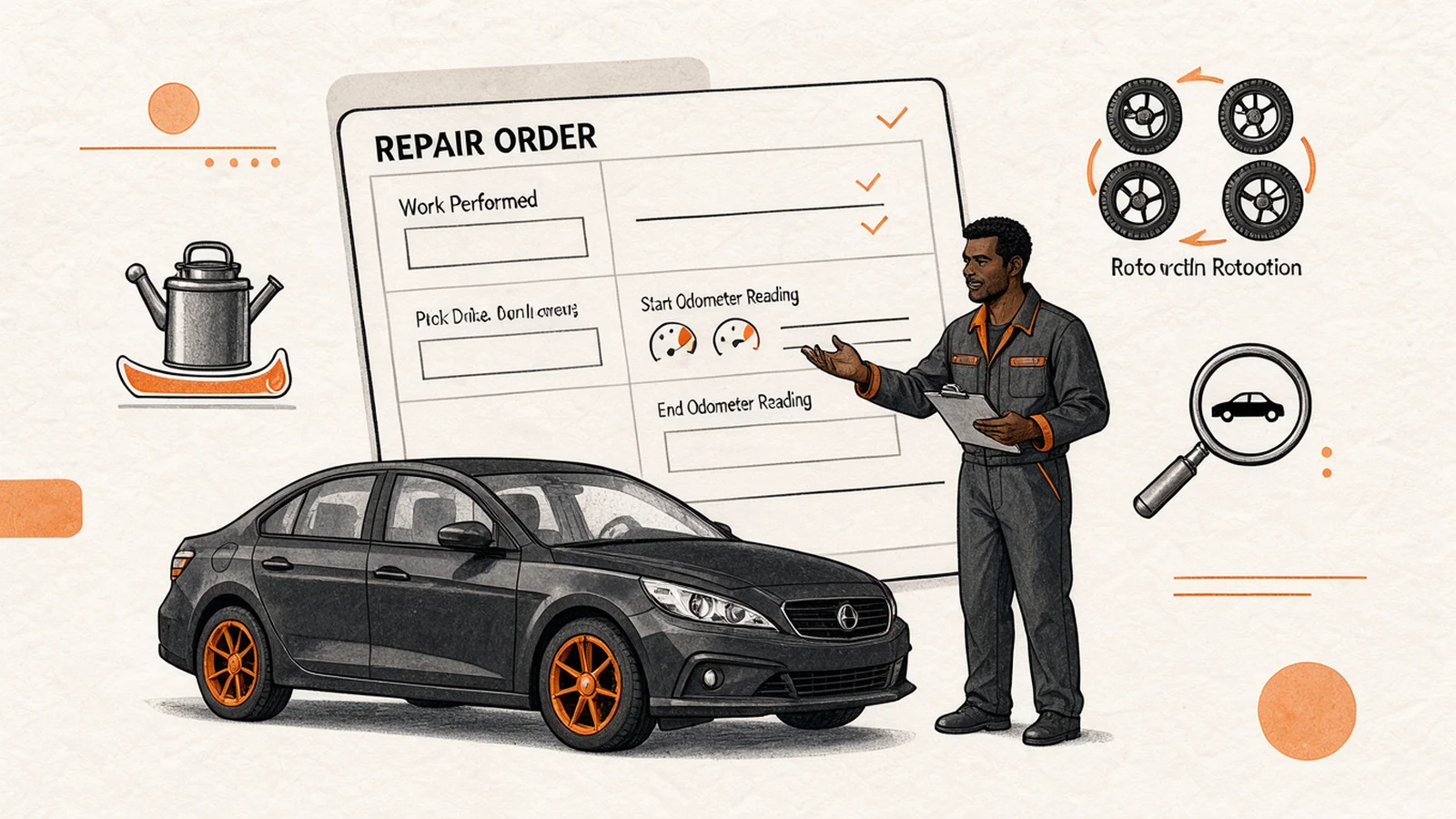
Repair orders: what the FTC says they should include
When you get repairs, the FTC advises that you should obtain a completed repair order that describes the work done and lists each repair and the parts supplied. The FTC also advises that the repair order include an odometer reading recorded when you brought the vehicle in and when the repair order was completed. (Source: FTC auto repair document)
How records support warranty limits and requirements
Auto warranties and service contracts often have limits (such as time and mileage) and may include specific requirements for authorized repair work or procedures to obtain reimbursement. Keeping detailed records can help you match what was done to the maintenance history you have documented. (Source: FTC auto repair document; FTC consumer guidance)
The FTC also advises consumers to follow the manufacturer’s routine maintenance recommendations. It further notes that keeping service records and receipts can help if there is a dispute about maintenance. (Source: FTC consumer guidance)
When to get professional help (without DIY risk)
Some maintenance and repair work can be hazardous or require proper tools, training, and diagnostic steps. You should consider professional assistance when you’re unsure about routine maintenance requirements, when warranty coverage may be involved, or when you need documented work that a repair order can reflect (including odometer readings and parts listed). The goal is to ensure your maintenance history is accurate and properly documented. (Sources: FTC consumer guidance; FTC auto repair document)
For fleets: keep records the same way for every vehicle
Small fleets can reduce confusion by keeping documentation consistent across vehicles—especially repair orders and receipts that show what was done, what parts were supplied, and the relevant odometer readings as recorded on the repair order. The FTC’s repair-order guidance provides a useful template for what to expect from service documentation. (Source: FTC auto repair document)
Brief FAQ
Do I really need to keep every receipt?
The FTC advises consumers to keep all service records and receipts because they can be used to prove the vehicle was properly maintained. (Source: FTC press release)
What if a warranty claim is challenged?
The FTC states that maintaining records of repairs and maintenance can help demonstrate proper maintenance and may help if a claim is challenged. (Source: FTC consumer guidance)
Will a dealer or manufacturer ask for records?
The FTC notes that a dealer/manufacturer may ask for maintenance records. (Source: FTC consumer guidance)
Where can I learn more maintenance planning ideas?
You can browse additional editorial topics on the Mobile Mechanic Connect blog and consider using the mechanic directory available through the site to match vehicles with routine maintenance needs—without relying on guesswork.
