For Florida personal vehicle owners and small commercial fleets, seasonal conditions can change quickly. A short, repeatable safety review can help you spot common wear and readiness issues. The items below are grounded in NHTSA summer driving guidance and are written as a practical “before you head out” checklist.
Tires: Pressure, Condition, and Tread
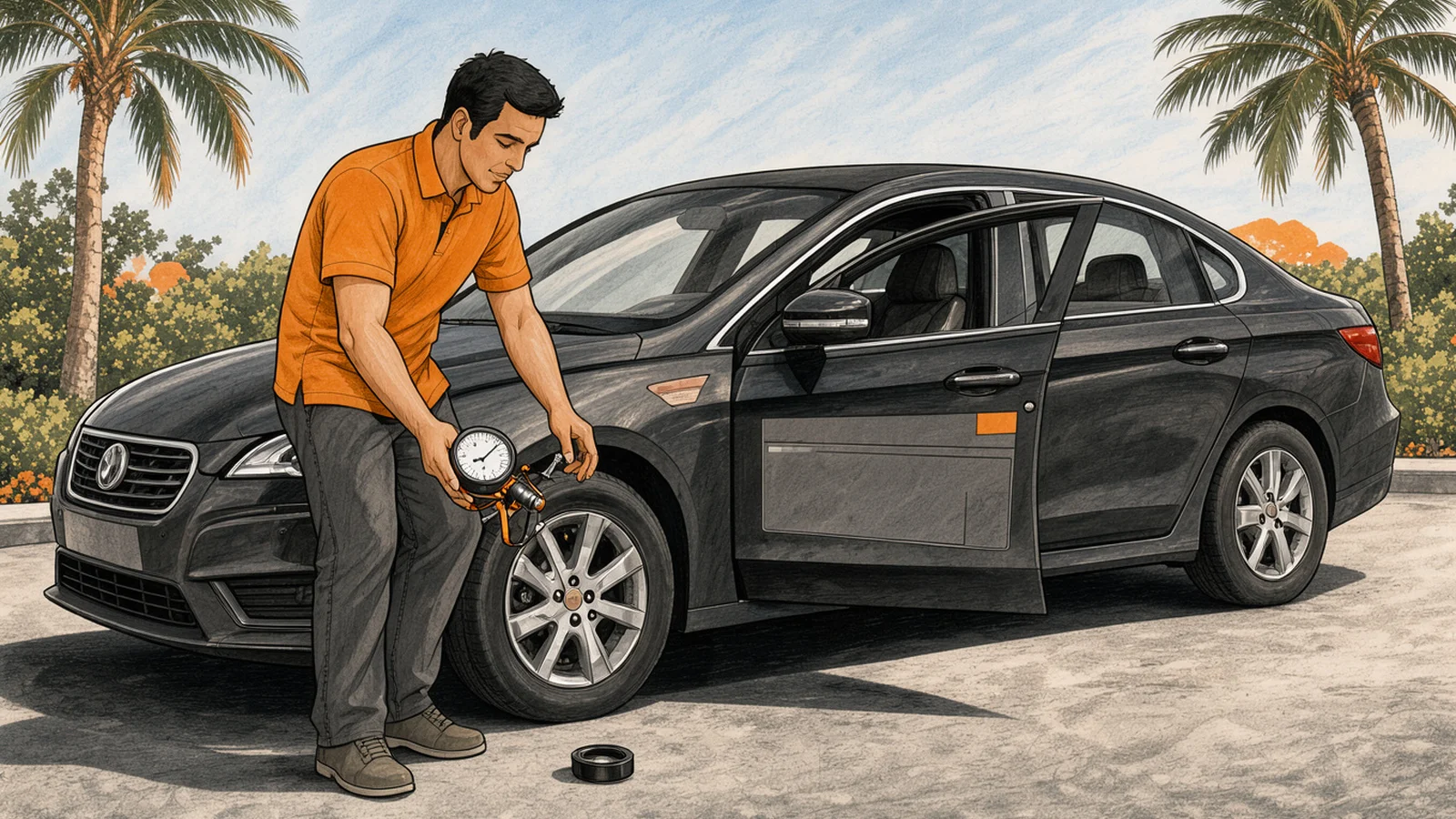
- Check tire pressure when tires are “cold” (at least three hours after driving) for an accurate reading. (NHTSA)
- Use the vehicle’s recommended inflation pressure, which is listed in the owner’s manual and on a placard on the driver’s door pillar/door frame. (NHTSA)
- Don’t inflate to the number on the tire itself—that’s the tire’s maximum pressure, not the recommended pressure for your vehicle. (NHTSA)
- Inspect tires at least once a month and before long road trips for damage such as cuts, punctures, bulges, scrapes, cracks, bumps, and tread/sidewall problems. (NHTSA)
- Monitor tread depth; NHTSA states tread should be at least 2/32 of an inch on all tires. (NHTSA)
NHTSA also notes that underinflation is a leading cause of tire failure. (NHTSA)
Lights and Signals: Visibility Matters
- Make sure headlights, brake lights, turn signals, emergency flashers, and interior lights work. (NHTSA)
Under the Hood: Belts and Hoses
- Inspect belts and hoses and look for obvious wear such as bulges, blisters, cracks, or cuts. Replace if they show obvious wear (have a qualified professional handle replacement as needed). (NHTSA)
- Ensure hose connections are secure. (NHTSA)
Fluids and Battery/Charging Check
- Check oil level periodically; if an oil change is almost due, NHTSA recommends doing it before travel for conventional vehicles and hybrids. (NHTSA)
- Have a mechanic check the battery and charging system for any necessary repairs or replacements. (NHTSA)
Spare Tire, Tools, and an Emergency Kit
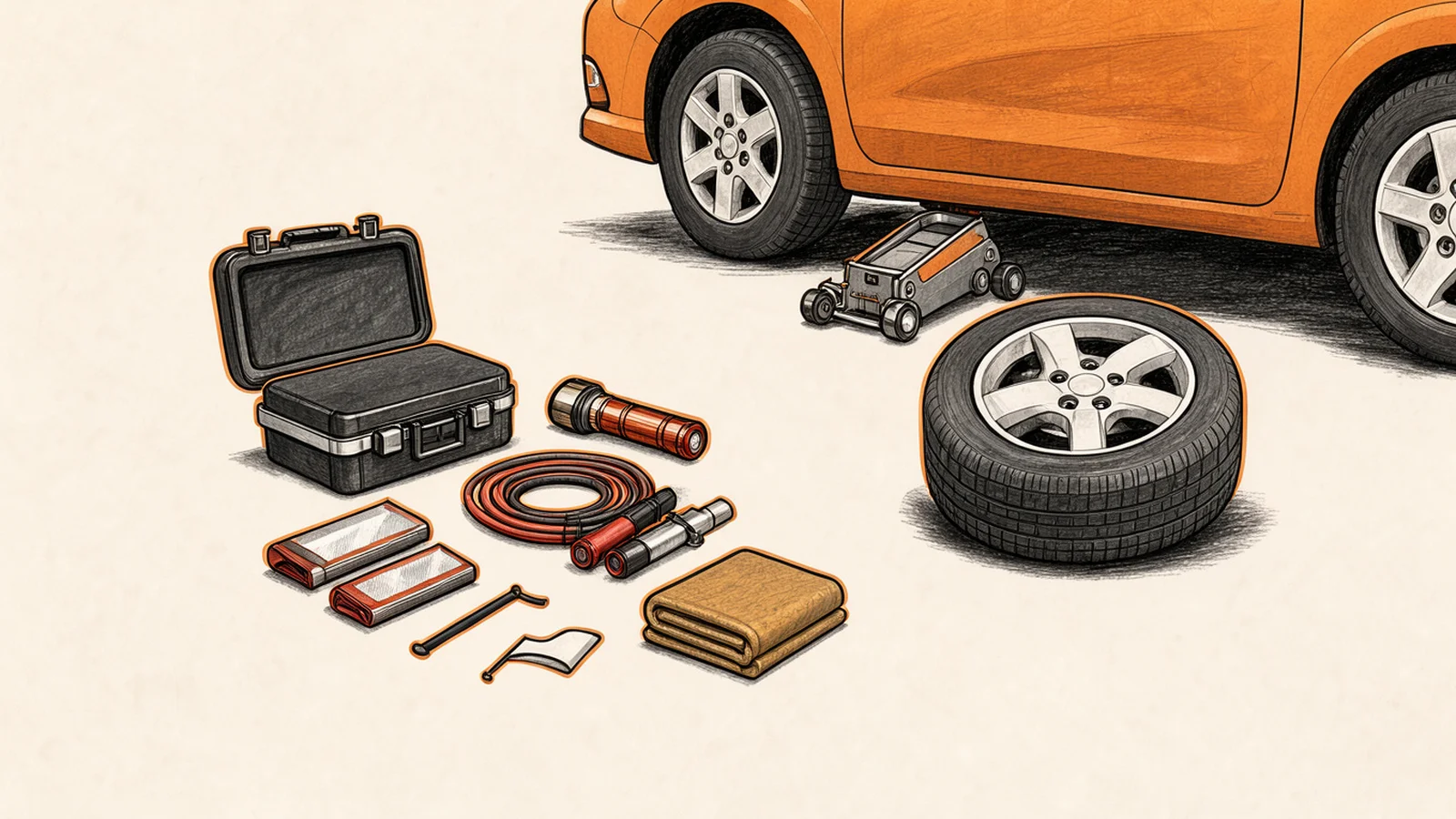
- Make sure you have a spare tire and car jack kit. (NHTSA)
- Put together an emergency roadside kit. NHTSA includes examples such as a cell phone and charger, jumper cables, a tire pressure gauge, a flashlight, flares (or a white flag), basic repair tools/duct tape, water, and emergency blankets/towels. (NHTSA)
When to Get Professional Help
Some checks are visual and straightforward; others benefit from a mechanic’s inspection. NHTSA recommends having a mechanic check the battery and charging system. (NHTSA)
Choose professional help if you find obvious belt/hoses wear (bulges, blisters, cracks, or cuts) or if a vehicle shows signs that could indicate a safety-critical issue. For hazardous repairs, avoid attempting complex repairs without proper training and equipment.
Quick FAQ
How often should I check tire pressure?
NHTSA advises checking tire pressure using the recommended inflation pressure and doing so when tires are “cold” (at least three hours after driving). (NHTSA)
Should I follow the pressure number printed on the tire?
No—NHTSA cautions that the number on the tire is the tire’s maximum pressure, not the vehicle’s recommended pressure. (NHTSA)
What tread depth does NHTSA recommend?
NHTSA states tread should be at least 2/32 of an inch on all tires. (NHTSA)
Need more seasonal guidance?
For additional maintenance reminders and planning ideas, visit https://mobilemechanicconnect.com/blog/. If you want a local support option, consider the Mobile Mechanic Connect mechanic directory to find a service professional in your area (without relying on this article for repair decisions).
