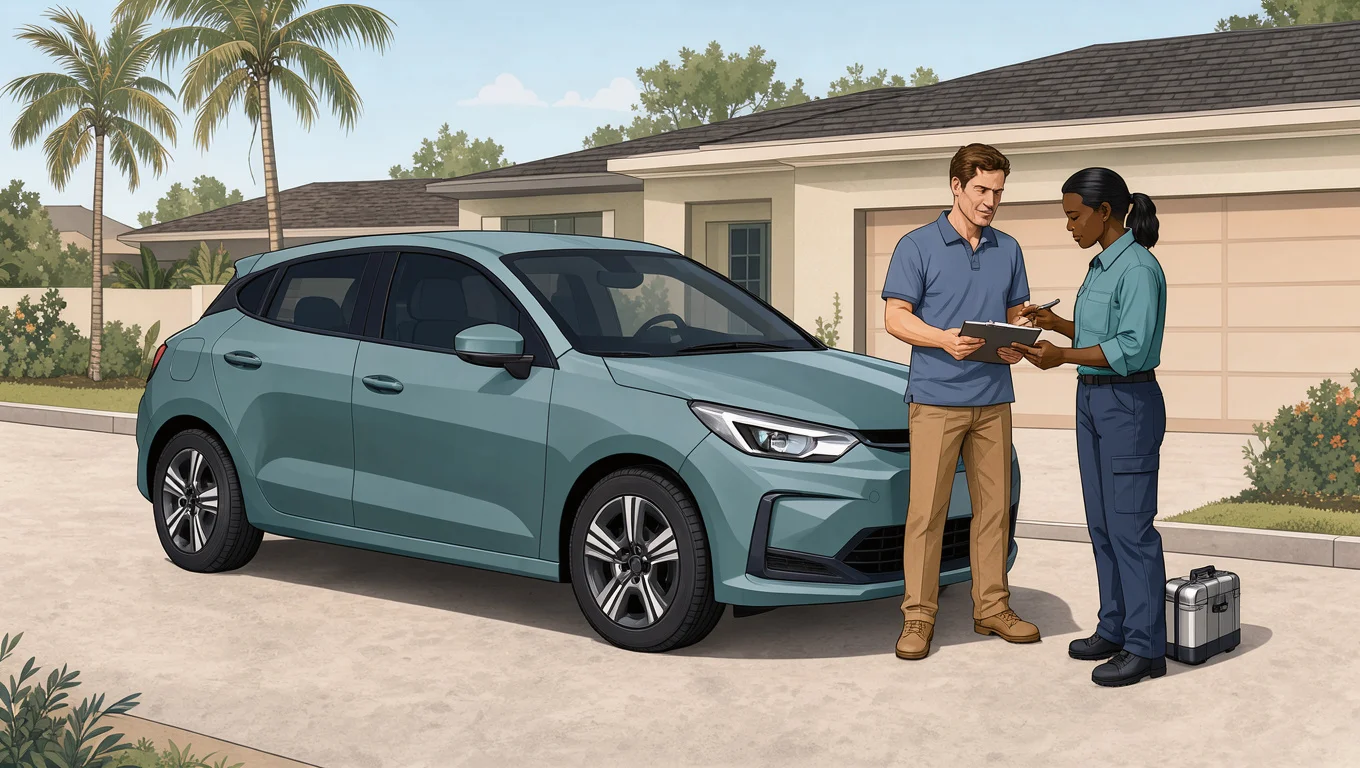
Getting ready before a mobile mechanic visit helps everything run smoothly—especially in Florida weather and on tight schedules. Think of this as your “pre-arrival briefing” for the technician: clear vehicle info, safe access, and a shared plan for how work will be authorized.
Before the technician arrives: your quick setup
1) Gather your vehicle information
- Year, make, model, trim (if you know it), and mileage
- What you’re noticing: symptoms, when it happens, and any patterns (for example: only when the engine is cold, only during braking, only after rain, etc.)
- Any warning lights currently on (and when they first appeared)
- Recent work performed (repairs, parts replaced, fluid changes) and who did it
- Modifications you’re aware of (aftermarket parts, non-stock tires, tuning, added accessories)
2) Choose safe, permitted parking and access
- Pick a spot where the technician can work safely and where you’re allowed to park (home driveway, approved property space, or another permitted location).
- Do not ask anyone to move the vehicle if it could be unsafe. If relocation might be risky, ask the mechanic (and, if needed, the towing provider) what they recommend before moving anything.
- Have a clear path to the vehicle: enough space for the technician to get tools in and out.
- If you have shared property rules (HOA, apartment complex, workplace), know where vehicles may be serviced.
3) Confirm the appointment details (especially in Florida)
- Double-check the day/time window and who the technician will contact when arriving.
- Plan for weather: if rain or storms are likely, decide in advance how you’ll coordinate (for example, whether the visit can shift within a window).
- If you won’t be home, arrange an alternative method for access that’s still safe and authorized.
4) Prepare keys and access the right way
- Keep your keys or key access ready and easy to hand over.
- If the vehicle requires special access (parking gate, keypad entry, lockbox), make sure the technician can use it.
- Let the technician know where vehicle-related items are stored (manuals, prior invoices/receipts, or a folder with records).
What to discuss during the visit: expectations and approvals
Clear communication prevents surprises. Before any work begins, align on the plan and how decisions will be made.
5) Ask what the mechanic needs to start
- Confirm what information will help most: your symptom notes, any prior work, and where to look first.
- If you have repair records or receipts, organize them so the technician can review quickly.
- Ask how the technician will document findings so you understand what was checked.
6) Review diagnostic fees and a written estimate
FTC “Auto Repair Basics” recommends asking whether the technician has experience with your make/model, discussing diagnostic fees, requesting a written estimate, agreeing on approval before extra work, and keeping repair records—use those points as your checklist for a clear first step.
7) Agree on the contact and approval process
- Confirm how you’ll be reached during the visit (phone/text) and who approves changes.
- Ask how the technician will handle “findings that change the plan”—for example, whether they’ll stop and request authorization before proceeding.
- If multiple people share the decision-making, identify who has final approval.
8) Explain anything that may affect the outcome
- Tell the technician about any unusual circumstances: recent flooding/rain exposure, battery issues, prior intermittent problems, or parts that don’t match stock.
- Share how the vehicle is typically used (daily commute, work vehicle, delivery route)—without guessing technical causes.
- If you recently had tires or brakes serviced, mention it even if it seems unrelated.
Bring (or have ready) these items
- Vehicle info card (year/make/model/mileage)
- Symptom timeline notes (what happened first, when it worsened/improved)
- Repair records or receipts from recent visits
- Contact info for anyone approving work
- Keys and access instructions
Brief FAQ
Should I move the vehicle to make it easier to work on?
If relocation could be unsafe or difficult, don’t move the vehicle. Ask the technician (and, if necessary, the towing provider) what to do before you attempt anything.
What if I can’t be there in person?
Arrange approved access in advance and confirm exactly how the technician will gain entry to keys and the vehicle. Provide symptom notes ahead of time if possible.
How do I avoid confusion about extra work?
Agree upfront on the authorization process: how you’ll be contacted, what counts as “approval,” and what the technician does when new issues are found.
What if the problem is intermittent?
Share what you know: when it happens, the conditions, and any recent changes. Even if it’s not visible during the visit, your notes help the technician target what to check.
Need help scheduling a mobile mechanic?
Start here to find a trusted mobile mechanic: https://mobilemechanicconnect.com.
Commercial checklist (brief)
Use this quick list for fleet, service, and business vehicle scheduling:
- Vehicle ID details: year/make/model + mileage + unit number (if you use one)
- Route/usage context: typical duties, last known “good run,” and any patterns (time of day, load, weather)
- On-site constraints: where vehicles may be serviced, site access instructions, and timing windows
- Point of contact: who can approve work during the visit (name + phone)
- Paperwork ready: maintenance logs and recent repair receipts
- Communication plan: how updates will be delivered (text/call/email) and when work pauses for approval
